We’re in ETO Magazine!

We are delighted that our opinion on the latest ISO 3533 standards for adult pleasure products features as part of an industry standards article in the November issue of ETO Magazine.

Read the full article here.

Billed as the “Pleasure Products Trade Magazine”, ETO is a respected B2B publication distributed to adult retailers and manufacturers based in the UK. The publication has a total readership of 15,000.

Let us know your views…..

Do you think the new safety standard, even voluntary, well help to improve the reputation of our industry? We’d love to hear from you!

If you have an idea for a new adult toy or wish to review a current one, we’d be happy to discuss this with you. Contact us today.

Sharing

FacebooktwitterredditpinterestlinkedinmailFacebooktwitterredditpinterestlinkedinmail

A long time coming – The adult toy industry finally gets a set of quality standards

Sated Design’s mission has always been to bring legitimate product design into the ‘wild west’ of adult toys. News of the new ISO 3533: Sex toys design and safety standards is music to our ears when so many products in the marketplace are badly designed, poorly made and risk harming the end users.

Considering how and where adult toys are used, a lack of safety and quality standards particularly with regards to materials has posed huge risks to the professionalism and reputation of the industry. The disregards of some for even the most basic diligence in materials and design has caused medical related problems for end users; so much so that the formation of the new ISO 3533 was reported as being initially proposed by medical professionals, concerned by the number of sex toy related surgical procedures and ailments they were seeing.

In our opinion there is no excuse for producing a product that risks harming its user and there are many safety standards which are sidestepped by crafty use of product descriptions. It is common knowledge that adult toy products can still fall in the “novelty product” category which means a set of tight industry standards are not applied. And yet, as the adult toy industry grows strongly (some estimate that its value will reach more than $36.1 billion by 2027), the industry is still struggling to be taken seriously.

Many resellers and a great many more consumers remain ignorant to the risks a badly designed adult toy can cause. Adoption of the voluntary ISO 3533 by designers and manufacturers with support from marketing could prove to be a great mechanism to raise awareness and use market forces to drive away those few who spoil it for everyone else. The certification will mean recognition for those who are producing best in class, high quality products. This will raise the bar for the quality of adult toys and the longer term hope is that this will percolate down to the consumers via the retailers so consumers will understand how to make the right product choices.

Sated Design is a company of product designers who are working on the cutting edge of new materials, processes and technologies in an incredibly diverse range of disciplines. It is our ethos that every adult toy product we design will be safe and fit for purpose. We welcome any standard, voluntary or otherwise that supports the work we do.

If you have an idea for a new adult toy or wish to review a current one we’d be happy to discuss this with you. Contact us today.

Sharing

FacebooktwitterredditpinterestlinkedinmailFacebooktwitterredditpinterestlinkedinmail

The ElectraStim project.

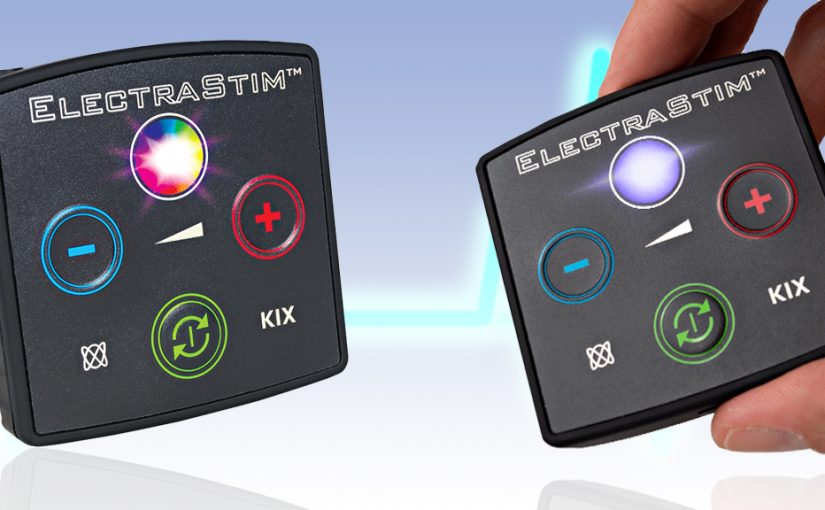
We were delighted to work once again with our client ElectraStim on a brand-new electro-stimulation device to celebrate their 20 years in the SexTech industry.

Our services can be easily tailored to suit the client and, in this instance we were commissioned to create an external case for the internal electronic components of the new product. ElectraStim had already produced their internal electronic components and had a well-defined specification for the size, shape, style and construction of the case that they wanted so we were able to take their specification and quickly interpret what was required. Read more in our portfolio.

The new KIX product looks great, and we wish ElectraStim every success with launching it into the marketplace.

If you’ve got an idea for a new adult toy product or need a bit of help with refreshing a current one, we can help you on your journey. We understand the drive you have to satisfy the desires of your customers and it’s our aim to satisfy your needs for quality, innovation and product design.
Contact us today.

Sharing

FacebooktwitterredditpinterestlinkedinmailFacebooktwitterredditpinterestlinkedinmail

Considering to new ‘right to repair’ law

Lat Thursday the UK’s ‘right to repair’ law came into force. Designed to tackle “built in obsolescence”, the new law is a supposed step change towards tackling our e-waste mountain, consumerism and ultimately climate change.

However does this new law actually go far enough? Or is it just another missed opportunity?

At present it appears the new legislation means manufacturers have to provide replacement parts but there is no cap on the costs of those replacement parts or indeed the call out charge for a trained engineer to come out and fit them, if required. Reading through the comments attached to a BBC article, there is a clear desire from consumers to ‘do their bit’ but this law is met with skepticism because fundamentally it still works out cheaper and more convenient to just go out and buy a new product.

Back in 2019 when Sated Design’s Director Chris attempted to repair his lawnmower, he was thwarted by a poor design and the inability to get hold of the replacement parts. This resulted in another product being thrown in to landfill unnecessarily.

If this ‘right to repair’ mindset has any chance of working out, it needs to be considered at the design stage of any product before being spread to manufacturers and to consumers.

Imagine if all designers had a mindset for designing not only for assembly, but also for disassembly. If they created products with repair in mind; considering the ease of disassembly, material separation for recycling and were intuitive to fix. As designers, we have a responsibility to be mindful of the end of use of the products we design.

Visualise having the ability to easily fix your expensive product yourself, perhaps you’ll even get enjoyment from it or learn something new.

So in conclusion, this new ‘right to repair’ law is addressing this problem to a small extent, but in reality it’s merely scratching the surface. The law needs to go further and be fundamental to every aspect of a product’s development in order for it to truly make a difference.

Here at Sated Design, we consider all these elements throughout the product development process. If you have an idea you want to develop, we can assist with the above issues and together we can create great products that literally do not cost the earth. Because after all, is it really right that so much is thrown away?

Sharing

FacebooktwitterredditpinterestlinkedinmailFacebooktwitterredditpinterestlinkedinmail

UKCA Marking – What you need to know

Britain’s exit from the European Union is affecting how people in the UK have to run their businesses. Some businesses have been greatly affected whilst others remain largely unchanged. Within the sphere of new product design there are some changes required, for now the new requirements are not far reaching and should be easy for most businesses to comply with. Part of these new requirements is UKCA marking.

The UKCA mark applies to most goods that previously required a CE mark. Currently technical requirements for the standards remain the same. For example, products are still subject to GPSR and, as before operate on the understanding that any product must be safe for intended use. If there is legislation specific to the type of product then this should take president. For example, both Toys and Electrical Equipment still have their own standard. These were previously referred to as “harmonised standards” from the EU but are now termed as “designated standards” and are published by the UK government.

UKCA marking came into effect on 1 January 2021. However, to allow businesses time to adjust to the new requirements, businesses will still be able to use the CE marking until 1st January 2022 in most cases. At the start of 2022 the UKCA marking must be present at least as a label affixed to the product or an accompanying document. And then from 1st Jan 2023 UKCA marking must be permanently attached to the product.

This does not apply to existing stock, for example if your goods were fully manufactured, CE marked and ready to place on the market before 1 January 2021. In these cases, your goods can still be sold in Britain with a CE marking.

There are however some cases when businesses need to apply the new UKCA marking to goods being sold in Great Britain immediately from 1 January 2021. When asked for clarification on which goods have this requirement the government Goods Regulation Team advised the following:

“You will need to use the new UKCA marking immediately if all the following apply to your product:

• it is for the market in Great Britain
• it is covered by legislation which requires the UKCA marking
• it requires mandatory third-party conformity assessment
• if conformity assessment has been carried out by a UK conformity assessment body and you haven’t transferred your conformity assessment files from your UK body to an EU recognised body before 1 January 2021”

As well as the marking of products there are some changes to third party test house certification, record keeping and declarations of conformity.

Sated Design’s recommendation during this transition period is that it would be best to exercise an early awareness of CE and UKCA for your project. Consult a third-party test house who are established Notified Bodies in both the UK and EU, and who specialise in the particular area of standards, compliance and certification your project requires. This will help make sure the most efficient route to compliance is adhered to.

Sharing

FacebooktwitterredditpinterestlinkedinmailFacebooktwitterredditpinterestlinkedinmail

Sated marks one year since the first UK lockdown

Today the UK marks one year since the first coronavirus lockdown. Now is as good a time as any to ask ourselves to compare our lives 12 months ago to what they are now. What are we seeing? What positives can we take from this? How can we apply these to how we live and how we work going forward? Is there a better way?

We think it is important to talk about what Sated Design has done because providing guidance and support to our clients, is a large part of our work as product designers. If we can practice what we preach and show resilience as a business, offer sustainable alternatives, implement cost saving measures and a more beneficial way of working, we can encourage these businesses who wish to look at their own strategies for dealing with Covid19..

Here are some of the ways we have adapted to our ‘new normal’.

Providing for our staff

The biggest change for us has been the relocation of some of our staff as a result of social distancing measures. In the office we have made changes including staggered breaktimes, availability of PPE, a new layout for the office and become more aware of not gathering around the printers etc.
For those that now work from home there has been an improvement in the work/life balance and with the assistance of technology, it is possible to liaise between those who need to come into the office and those who can work from home to maintain what is essentially a normal working week.

Everyone has adapted to this new way of working without any drama and much of what we have implemented will no doubt influence how we operate as a business going forward.

Supporting our clients

With regards to our product design service and a client list that extends across the UK and overseas, we were already adept at using remote conferencing and real time on-screen CAD viewing to discuss projects so there hasn’t been any notable difference.

A great many of our projects take months to work through because of development, tooling and testing so a large proportion of our work is focussed on supporting work in progress. Current projects have continued with very little interruption. New enquiries come in every week and we are heartened to see an increase in enquiries as business confidence increases and we near the end of the imposed lockdowns.

Director Chris Howsam says “Businesses should be thinking ahead and planning for what happens when the lockdown is lifted. We have supported our clients by maintaining a constant service over the last twelve months so as soon as this is over, they can be the first out of the blocks”.

He continues “Taking action now will make all the difference when it comes to securing the future of your business. If you have a great idea and would like a little help to guide you through the journey of making it a reality, take this opportunity and get in touch”.

Sharing

FacebooktwitterredditpinterestlinkedinmailFacebooktwitterredditpinterestlinkedinmail

Manufacturing Options

The pandemic has shined a bright light on our UK manufacturers and demonstrated not only their innovation and their resilience, but also the skills and ingenuity of the workforces to adapt and overcome. With so much uncertainty in the global economy, many businesses are understandably concerned about mitigating their risks. Those with existing offshore manufacturing and those looking for manufacturers are weighing up the pros and cons of where to manufacture.

It is true that low cost, high volume consumer products can be difficult to manufacture competitively in the UK and on this factor alone many would say it might appear not to be commercially viable for a business to reshore their product manufacturing or to manufacture in the UK. In our experience, so long as the comparisons are like for like and the full picture is considered, the answer is not as black and white as some would suggest.

Here are ten reasons why manufacturing in the UK can benefit a business and counterbalance a lift in the unit price.

1. No language barrier. This facilitates clearer negotiations and ensures words used are ‘interpreted’ correctly. It is quite normal for many offshore companies to employ translators who have no technical training. They are often unable to express the true meaning of emails and drawings to the shop floor. Notes on control drawings are a classic example of critical information which often gets ignored or miss interpreted.

2. Reduction in financial paperwork and no need for currency conversion. Many businesses are concerned about exchange rates and the redefining of what money constitutes. They ask if they should throw their weight behind bitcoins? The dollar? The Euro? Or sterling? Buying domestically largely solves this conundrum.

3. There is immense value in having a team come together around a table or a machine at a moment’s notice to solve problems. Sadly, it is unlikely that international travel will be as convenient as it used to be for a very long time. Getting to almost anywhere in the UK is comparably very easy and very quick. Once local travel restrictions are ended it will be easier and more cost effective to make UK site visits as and when they are needed.

4. International shipping costs are sky-rocketing and problems with landing and forwarding are causing many logistical nightmares.

5. Import and taxation are not easy and the landscape is changing as the UK adapts to post Brexit and other international trade deals.

6. Domestic manufacturing reduces the risks of variable delivery times and partial-shipping can often be resolved with less trauma when the supplier is ‘around the corner’.

7. The UK is arguably one of the most constant and stable nations on earth with a working infrastructure and tolerant population. Political wrangling, global disaster events, civil wars etc have shown how vulnerable many businesses could be to events out of their control.

8. Importantly, and something that is often missed – domestic manufacturing will provide a certain level of protection from intellectual property theft and give confidence in compliance with standards and regulations governing product performance and manufacture. Counterfeit materials, dodgy certification and inferior quality can ruin a business.

9. Can you be certain that the supplier is looking after your best interests? Inspections and sign offs are easier to arrange and verify when parties are local to each other.

10. Let’s not forget the golden rule – you usually get what you pay for.

There are strong arguments for domestic manufacturing and especially for reshoring but we must not forget that many businesses are very successful in manufacturing offshore. They achieve this by nurturing strong, mutually beneficial relationships with proven partners. They get the right balance between cost and volume and marry the right manufacturing partner to their needs.

Sated Design have extensive experience with manufacturing here in the UK and offshore and we think the best way to tackle this question is to approach it with an open mind and look at both options in depth, matching capabilities, understanding cost, weighing up the risks and benefits.

Need help taking your product idea to manufacture? Whatever the budget for tooling, required production quantities and preferred country of manufacture we will work very closely with our clients and manufacturing partners to determine the optimum manufacturing solution to meet the demands of the project. We can help to ensure suppliers meet the quality you expect, both in pre-production trials and once production has started.

Contact us today to discuss your requirements.

Sharing

FacebooktwitterredditpinterestlinkedinmailFacebooktwitterredditpinterestlinkedinmail

Season’s greetings from Sated Design

As we draw a close on the year 2020, we reflect on how tough it has been for everyone and we feel we need a rest and to recharge our batteries.

Despite our own challenges, as a business Sated Design has adapted to new ways of working and remained open for business – on hand to support our clients at every step. However, we know many others have not been so fortunate. This has been tough to see and we hope that the worst will soon be behind us all.

Director Chris Howsam says “the world seems to have been occupied with doom and gloom for a long time and it is easy to forget that tomorrow is a new day with new hope and new dreams. We have taken the approach that we can’t change the past, but we can hold our heads high, go forward and make the best of what we have”.

He continues, “we wish all of our clients and colleagues a safe and restful break over the holidays. Our seasonal message going into 2021 is this, ‘New Year + New Energy + New opportunities = New success’ and this is a sentiment we hope many will adopt as their own”.

Do you have an idea for a new adult pleasure product you wish to bring to market in 2021? Would you like a little help to guide you through the journey of making it a desirable reality?

Contact us to start your project.

Sharing

FacebooktwitterredditpinterestlinkedinmailFacebooktwitterredditpinterestlinkedinmail

Avoiding energy poverty

Christmas is coming and on most of our ‘wish lists’ there is bound to be an electronic device of some sort – mobiles phones, big TV, games consoles, smart tech products; the list of those products is endless and demonstrates how significant our dependence on electricity is today.

Currently the electricity that makes our lives safe and convenient is mostly derived from fossil fuels and concerningly there are only so much of those to go around. At current usage levels, oil and natural gas are set to run out in the next 40 years but we all know that our global population is increasing at a staggering rate and with more people, comes more demand. We also live in a world that demands convenience where products wait in sleep mode to spring into action at the press of a remote or call of an app. These devices create a huge background demand on electricity because they are never completely ‘off’.

If we don’t have sufficient capacity in our National Grid to cope with energy demand, the result will inevitably be black outs such as those the nation saw in the 1970s. Can we imagine how catastrophic that will be to our industries as well as our workplaces and personal households?

The blame for this lack of generating capacity, in the UK at least, is a refusal by successive governments over decades to face up to the demands of an out of control demand on electricity and to plan for a capable infrastructure. Here in the UK our power plants are outdated and will be decommissioned one by one throughout the next decade with those planned to come online suffering cost over runs and delays. Staggeringly, there does not appear to be any realistic succession plan for when they go offline and yet we creep closer and closer towards this inevitability and resulting possibility of dealing with the reality of energy poverty.

There clearly is a shared concern from energy providers. After the Government’s latest announcement that all new vehicles need to be Electric Vehicles (EV) by 2030, a report by the Distribution Connection and Use of System Agreement (DCUSA) warned that “electricity networks in Great Britain are not designed to accommodate the significant additional demand of certain consumer devices (such as EV chargers) presents”. This has resulted in new powers being sought to allow energy providers to essentially turn off high-drain devices when demand is too high.

Not an ideal solution for a nation used to the convenience of having access to energy sources as and when they need them or being told to switch to EVs. It literally could mean you wake up in the morning and your EV went uncharged overnight.

The real answers regarding energy generation and policies for fair use remain with governments but in the meantime we all need to assist in avoiding the very real threat of energy poverty and get more used to being a part of the solution.

Product Designers can do our bit too by designing products with zero energy in mind. A movement towards smarter products with the ability to learn and then predict when they will be used by their owner will mean they can disconnect at an appropriate time rather than be on standby.

Let’s create something great together.

If you have got an idea for a great new pleasure product and want to consider how it can be designed with energy efficiency in mind, we will assist you through your journey. Even the most accomplished will require assistance which is where our expertise is invaluable. We work closely with all our clients to ensure they have all the support they need.

Sharing

FacebooktwitterredditpinterestlinkedinmailFacebooktwitterredditpinterestlinkedinmail

Avoiding DIY Patents

The adult toy industry is notorious for unscrupulously copying great ideas. Both securing effective Intellectual Property Protection (IPP) and taking swift and aggressive action to stomp out copy cats are both crucial to maintaining your competitive edge. IPP legally identifies you as the originator and owner of your idea and gives you exclusive rights to exploit it so it is absolutely critical to your business.

There are a number of ways to protect the intellectual property of your idea. It is recommended that you speak to an IPP expert such as a patent attorney at the right time to select the best forms of protection for your product.

There are many free patent databases that you can use to carry out your own searching, but professional patent searchers and patent attorneys who specialise in such services will almost inevitably find documents that are more relevant than those found by a novice searcher.

A DIY patent is not the best approach and can do more harm than good. It is so important to seek expert legal advice!

Here at Sated Design, many of our clients initially reached out to us because we work so closely with a firm of leading Intellectual Property specialists in our network and are therefore familiar with their methods and requirements. We work with these specialists to protect the IP of your sex toy invention idea by providing descriptions of claims and supporting illustrations of any new IP created. In addition to providing you with reassurance, this may also reduce search and filing fees significantly.

Releasing details of your idea into the public domain without protection may jeopardise the chances of your IPP applications being granted, giving your competitors an opportunity to get the idea to market before you. Our top tip is that if you need to discuss your idea with anyone, such as a supplier, use a Non-Disclosure Agreement (NDA) document to ensure that all parties regard the discussions as confidential.

If you’ve got a new pleasure product idea and require assistance taking it to the point of manufacture, we can provide help at any step of the way.

Contact us today.

Sharing

FacebooktwitterredditpinterestlinkedinmailFacebooktwitterredditpinterestlinkedinmail