The Power of Prototyping

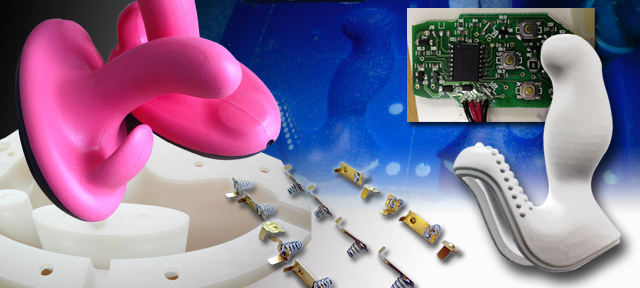
Providing a link between a world of virtual design and real life, a prototype is a vital way of testing designs. 2D images do have a place in the designing process but there is no substitute for holding something tangible in your hand. The prototype offers extremely high levels of accuracy and intricacy, this paired with modern prototyping techniques such as stereolithography (‘growing’ parts out of laser cured resin) can provide stunning results.

For a product design consultancy, a prototype is a preliminary version of a product which can be used for testing and evaluation – this can be to gain client approval on form and feel of the product, or to inform the designer of necessary adjustments to mechanisms or tolerances on parts that fit together.

The prototype can also help stake-holders to make the best decisions for the project, so that the design can be optimised as part of its development journey leading to manufacture and launch. It is therefore important to set out the purpose for the prototype as this is key to how a prototype should be prepared.

At some point a human being will interact with a product. The sooner that user interface is evaluated, then the better that interaction can be. It is impossible to overstate how important prototyping is to ensuring an effective product design and development process, delivering the optimum results and a great end-user experience.

Here at Sated Design we have a large catalogue of external suppliers for all manner of prototyping services and an in-house prototyping capability, enabling our expert model-makers to produce high-quality prototypes with fast turnarounds.

Contact us today to discuss your requirements.

Sharing

FacebooktwitterredditpinterestlinkedinmailFacebooktwitterredditpinterestlinkedinmail

Q&A with Louise for International Women’s Day 2022

International Women’s Day falls on the 8th March each year. Its purpose is to celebrate the social, economic, political and cultural achievements of women around the globe. In recognition of International Women’s Day 2022, we’re talking to Louise Beard, our Business Manager about her career in STEM (Science, Technology, Engineering and Mathematics), an industry where historically, women are underrepresented.

Can you tell us a bit about Sated Design and your role within the company?
“Sated Design is a name used for marketing the specific expertise of Hillside Product Design Ltd, in designing adult pleasure products and toys. Hillside is a consultancy specialised in helping companies develop and engineer innovative and successful products. We can help you get your new or updated product to market by working with you on product conception, engineering, prototyping and production.

Good design can help solve problems with existing products and give old product ranges a new lease of life as well as help you create a brand new product.

I am the Business Manager and I have a very varied role within the company. I am primarily responsible for the accounting, payroll and administration side of the business and that means I do everything from payroll and invoicing to ordering materials for the making of prototypes, however I also take part in brainstorming, testing, prototype building and other areas of the business as and when needed. The ‘non design’ staff within the business can have an input into the design process with ideas and review throughout the concept to prototype stages”.

How important is it do you think to have female representation within product design and engineering?
I think it is essential to have a female viewpoint into design and engineering. If being involved in this world has taught me anything over the last 30 years, it is that men and women often have different ideas as to how things work and how they should be used. These differences may not always be particularly big or noticeable but they do exist and a slightly different way of coming at things usually leads to a more rounded product that will suit its targeted audience”.

How can the STEM sector be made to be more attractive to women as a career?
“I think it needs to be pushed more in schools. Right down to primary school level, where girls can and should be told that engineering and scientific roles are as open to girls as they are to boys. Education has come a long way since I was at school and girls were not allowed to play rugby or football or do metalwork or woodwork. Girls were pushed into needlework and cookery and whilst those are admirable things, it didn’t give girls of my generation any idea that could do these things and be very good at them! Lets catch girls early and let them know that STEM subjects can be fun and can lead to amazing career choices!”

Do you do anything to promote STEM outside of business as well as inside it?
“I am, or have been, a member of a lot of local/national bodies such as Traders Associations and the FSB and I am always pushing for females in business, in general and in STEM businesses in particular, to stand up and be counted!!! I am a fervent believer that women have an equal ability, role, passion and competence within this world and we need to shout loud about it and bring in the next generations. We need to tell our young girls and women that they are capable, welcome and wanted in what has been seen in the past as more male dominated spheres of work”.

What are your hopes and dream for the future?
I would like to see far more women realising that they have got what it takes to succeed in STEM, to succeed in the workplace and to succeed in the traditionally male dominated areas of work and to rise within their chosen fields.

Things have improved hugely in the 30 years I have been business but we still have a way to go – and we women are the people to take it there!”

You can follow Louise on LinkedIn

Sharing

FacebooktwitterredditpinterestlinkedinmailFacebooktwitterredditpinterestlinkedinmail

Planning around the Year of the Tiger

On Tuesday 1st February celebrations for the Chinese New Year begin!

In China these festivities will continue long after this date, sixteen days to be precise! Sixteen days when factories close and virtually all manufacturing processes stop for the full duration of this holiday period. Some factories will close for even longer to allow for their workers to travel the huge distances to return to their home towns and villages. It is not unusual for workers to travel for several days to see family and friends they may not have seen for almost a year.

The Chinese New Year is therefore very important throughout China and much of South East Asia; of significant global importance, it is very much intertwined with the UKs business culture and it’s planning.

Whilst lead times are important to a project whatever the time of year, planning and scheduling are of upmost importance when the Chinese New Year falls during the production process. The effect this can have on a project’s lead time could cause significant delay and ramifications if not borne in mind at the onset. It can be quite a task to co-ordinate between different regions when moving tools and goods to arrive within a production window. Experience of working with domestic and offshore manufacturers and suppliers coupled with experience of the differing cultures and practices of quite a few countries certainly helps to minimise any delays in production.

The impact of Covid in China is not widely reported here in the West but it is clear from our sources that the planning we all need to make for Chinese New Year relies more than ever on asking the right questions and having suppliers that you have a long term working relationship with. Our close relationships with Chinese suppliers have ensured that our clients have had regular and accurate updates about the situation in China and planned effectively with very little disruption caused.
The Covid pandemic has brought challenges for domestic and offshore manufacturing over the last 2 years and at this time we are thinking of our friends in far away China who we have not seen for many months and say that we hope the year of the Tiger will bring health, happiness and prosperity. Thank you for your continued support and the extraordinary efforts you go to.

Do you need help taking your product idea to manufacture?

Whatever the budget is for tooling, your required quantities and your preferred country of manufacture we will assist with determining the optimum manufacturing solution to meet the demands of the project. Working with our network of manufacturing partners, we can ensure suppliers meet the quality you expect both the in-pre-production trials and once production has started. This assistance proves invaluable when opting for a manufacturer overseas.

Contact us today to discuss your requirements.

Sharing

FacebooktwitterredditpinterestlinkedinmailFacebooktwitterredditpinterestlinkedinmail

Season’s Greetings from Sated Design

And so we say goodbye to another year. During last year’s greeting we were hoping that the worst was behind us and so it was but like many other businesses we are not totally free of the repercussions and ravages of Covid 19. This has the makings of a story that will go on for a long time with ever more twists and turns like a rubbish TV serial way past its switch off date!


Despite these challenges, we as a business continue to adapt to new ways of working and have remained on hand to support our clients at every step.


Sated’s Director Chris Howsam says “The resilience of our business community continues to be tested but it is determined to move forward by adapting to every twist and turn of the plot whilst acting in the best interests of its employees and customers. This has been a challenge we and many other businesses have faced and overcome. So, this year we should say thank you to those who have supporting our decisions, good and bad as we get through to the other side.”


“I wish all of our clients and colleagues a safe and restful break over the holidays. I feel sure that 2022 will see new energy, new ideas and new success, so let’s look forward to that as 2021 draws to a close.”


If you would like to embark on a new product development in 2022, we’d be delighted to hear more about it. Contact us today to start your project.

Sharing

FacebooktwitterredditpinterestlinkedinmailFacebooktwitterredditpinterestlinkedinmail

How much do our sex lives impact on climate change?

The adult toy industry is estimated to be worth £36.1 billion by 2027 and encompasses electronic products, clothing, lubricants and contraceptives within its remit. All of these products will have a carbon footprint and an impact on climate change. Clearly some more than others – 10 million latex condoms are reportedly manufactured each year and disposed of in landfill after a single use. Many water-based or organic lubricants cannot be used with most condoms because of the risks of breakages.


So there lies a problem. Being responsible and protecting ourselves (i.e. using proper methods of contraception) can be in direct conflict with protecting our planet. The environmental costs of contraception will need to be off-set but it is our choice as a consumer if and how we choose to do this. For example, pledging a meat-free day, walking instead of using the car, showering instead of using the bath can all act as carbon offsets in exchange for our extracurricular activity!


Many pleasure product manufacturers are now considering ethical design – rechargeable toys and ethically made lingerie now feature in the majority of online and bricks and mortar retail outlets. Manufacturing poorly designed and poorly made novelty products is not justified. Not only does this damage the reputation of our industry but these products are manufactured waste products that shamefully clog up the planet.


We touched on the latest ISO 3533 safety standards for sex toys in our last article. Although voluntary, these standards will help set a quality bar within the industry.

At Sated Design, we can do our bit by ensuring that every product we design has a purpose and is designed with quality and longevity in mind. We invite our clients to think about the bigger picture too through their innovation.


It isn’t always possible to do the best thing for our planet in order to protect our own selves, however by being design savvy and off setting with ethical consideration we will go a way towards reducing our carbon footprint.

If you have an idea for a new adult toy or wish to review a current one we’d be happy to discuss this with you. Contact us today.

Sharing

FacebooktwitterredditpinterestlinkedinmailFacebooktwitterredditpinterestlinkedinmail

We’re in ETO Magazine!

We are delighted that our opinion on the latest ISO 3533 standards for adult pleasure products features as part of an industry standards article in the November issue of ETO Magazine.

Read the full article here.

Billed as the “Pleasure Products Trade Magazine”, ETO is a respected B2B publication distributed to adult retailers and manufacturers based in the UK. The publication has a total readership of 15,000.

Let us know your views…..

Do you think the new safety standard, even voluntary, well help to improve the reputation of our industry? We’d love to hear from you!

If you have an idea for a new adult toy or wish to review a current one, we’d be happy to discuss this with you. Contact us today.

Sharing

FacebooktwitterredditpinterestlinkedinmailFacebooktwitterredditpinterestlinkedinmail

A long time coming – The adult toy industry finally gets a set of quality standards

Sated Design’s mission has always been to bring legitimate product design into the ‘wild west’ of adult toys. News of the new ISO 3533: Sex toys design and safety standards is music to our ears when so many products in the marketplace are badly designed, poorly made and risk harming the end users.

Considering how and where adult toys are used, a lack of safety and quality standards particularly with regards to materials has posed huge risks to the professionalism and reputation of the industry. The disregards of some for even the most basic diligence in materials and design has caused medical related problems for end users; so much so that the formation of the new ISO 3533 was reported as being initially proposed by medical professionals, concerned by the number of sex toy related surgical procedures and ailments they were seeing.

In our opinion there is no excuse for producing a product that risks harming its user and there are many safety standards which are sidestepped by crafty use of product descriptions. It is common knowledge that adult toy products can still fall in the “novelty product” category which means a set of tight industry standards are not applied. And yet, as the adult toy industry grows strongly (some estimate that its value will reach more than $36.1 billion by 2027), the industry is still struggling to be taken seriously.

Many resellers and a great many more consumers remain ignorant to the risks a badly designed adult toy can cause. Adoption of the voluntary ISO 3533 by designers and manufacturers with support from marketing could prove to be a great mechanism to raise awareness and use market forces to drive away those few who spoil it for everyone else. The certification will mean recognition for those who are producing best in class, high quality products. This will raise the bar for the quality of adult toys and the longer term hope is that this will percolate down to the consumers via the retailers so consumers will understand how to make the right product choices.

Sated Design is a company of product designers who are working on the cutting edge of new materials, processes and technologies in an incredibly diverse range of disciplines. It is our ethos that every adult toy product we design will be safe and fit for purpose. We welcome any standard, voluntary or otherwise that supports the work we do.

If you have an idea for a new adult toy or wish to review a current one we’d be happy to discuss this with you. Contact us today.

Sharing

FacebooktwitterredditpinterestlinkedinmailFacebooktwitterredditpinterestlinkedinmail

Considering to new ‘right to repair’ law

Lat Thursday the UK’s ‘right to repair’ law came into force. Designed to tackle “built in obsolescence”, the new law is a supposed step change towards tackling our e-waste mountain, consumerism and ultimately climate change.

However does this new law actually go far enough? Or is it just another missed opportunity?

At present it appears the new legislation means manufacturers have to provide replacement parts but there is no cap on the costs of those replacement parts or indeed the call out charge for a trained engineer to come out and fit them, if required. Reading through the comments attached to a BBC article, there is a clear desire from consumers to ‘do their bit’ but this law is met with skepticism because fundamentally it still works out cheaper and more convenient to just go out and buy a new product.

Back in 2019 when Sated Design’s Director Chris attempted to repair his lawnmower, he was thwarted by a poor design and the inability to get hold of the replacement parts. This resulted in another product being thrown in to landfill unnecessarily.

If this ‘right to repair’ mindset has any chance of working out, it needs to be considered at the design stage of any product before being spread to manufacturers and to consumers.

Imagine if all designers had a mindset for designing not only for assembly, but also for disassembly. If they created products with repair in mind; considering the ease of disassembly, material separation for recycling and were intuitive to fix. As designers, we have a responsibility to be mindful of the end of use of the products we design.

Visualise having the ability to easily fix your expensive product yourself, perhaps you’ll even get enjoyment from it or learn something new.

So in conclusion, this new ‘right to repair’ law is addressing this problem to a small extent, but in reality it’s merely scratching the surface. The law needs to go further and be fundamental to every aspect of a product’s development in order for it to truly make a difference.

Here at Sated Design, we consider all these elements throughout the product development process. If you have an idea you want to develop, we can assist with the above issues and together we can create great products that literally do not cost the earth. Because after all, is it really right that so much is thrown away?

Sharing

FacebooktwitterredditpinterestlinkedinmailFacebooktwitterredditpinterestlinkedinmail

Are you aware of the UN38.8 Lithium battery certification?

We are all familiar with Lithium batteries and their increasingly popular application in electrical devices. For designers they are the go-to power supply and are used in their millions in a number of configurations. However, their use comes with a cautionary note, and this can be summarised in the old saying of “buyer beware”. These batteries have the potential to be a hazard. The battery must be safe and reliable for its intended use.

One of the questions you should ask of the vendor is, “does the battery meet the UN38.8 standard, set by the United Nations?”

Why is this question so important?

A UN38.8 certified lithium battery will have undergone a series of rigorous tests to show they withstand the physical and environmental hazards expected during intended use. It goes without saying that any product using a certified battery will not only be safer, but likely last longer too.

The responsibility to ensure that Lithium batteries meets standards falls upon the seller, but many buyers and sellers of electronic products across the globe are unaware that international regulatory bodies require this certification prior to shipping these goods. This opens up the possibility of uncertified batteries being offered for sale, usually at a bargain price.

There are 8 tests in the certification process, and each one must be passed in order to receive certification. This testing helps to provide an important safeguard for product developers, product sellers and lastly consumers. These tests are to ensure that a battery will not rupture, leak, disassemble or combust during transportation or during the products intended use.

The 8 tests are:

  1. Altitude simulation.
  2. Thermal testing.
  3. Vibration testing.
  4. Shock testing.
  5. External short circuit.
  6. Impact and crush.
  7. Overcharge.
  8. Forced discharge.

If a product is going to have a Lithium battery incorporated, then we would recommend only using batteries which have the appropriate UN38.8 certification. This will help to protect against using poor quality or faulty batteries which could ultimately provide customers with greater satisfaction and safety.

Sharing

FacebooktwitterredditpinterestlinkedinmailFacebooktwitterredditpinterestlinkedinmail

UKCA Marking – What you need to know

Britain’s exit from the European Union is affecting how people in the UK have to run their businesses. Some businesses have been greatly affected whilst others remain largely unchanged. Within the sphere of new product design there are some changes required, for now the new requirements are not far reaching and should be easy for most businesses to comply with. Part of these new requirements is UKCA marking.

The UKCA mark applies to most goods that previously required a CE mark. Currently technical requirements for the standards remain the same. For example, products are still subject to GPSR and, as before operate on the understanding that any product must be safe for intended use. If there is legislation specific to the type of product then this should take president. For example, both Toys and Electrical Equipment still have their own standard. These were previously referred to as “harmonised standards” from the EU but are now termed as “designated standards” and are published by the UK government.

UKCA marking came into effect on 1 January 2021. However, to allow businesses time to adjust to the new requirements, businesses will still be able to use the CE marking until 1st January 2022 in most cases. At the start of 2022 the UKCA marking must be present at least as a label affixed to the product or an accompanying document. And then from 1st Jan 2023 UKCA marking must be permanently attached to the product.

This does not apply to existing stock, for example if your goods were fully manufactured, CE marked and ready to place on the market before 1 January 2021. In these cases, your goods can still be sold in Britain with a CE marking.

There are however some cases when businesses need to apply the new UKCA marking to goods being sold in Great Britain immediately from 1 January 2021. When asked for clarification on which goods have this requirement the government Goods Regulation Team advised the following:

“You will need to use the new UKCA marking immediately if all the following apply to your product:

• it is for the market in Great Britain
• it is covered by legislation which requires the UKCA marking
• it requires mandatory third-party conformity assessment
• if conformity assessment has been carried out by a UK conformity assessment body and you haven’t transferred your conformity assessment files from your UK body to an EU recognised body before 1 January 2021”

As well as the marking of products there are some changes to third party test house certification, record keeping and declarations of conformity.

Sated Design’s recommendation during this transition period is that it would be best to exercise an early awareness of CE and UKCA for your project. Consult a third-party test house who are established Notified Bodies in both the UK and EU, and who specialise in the particular area of standards, compliance and certification your project requires. This will help make sure the most efficient route to compliance is adhered to.

Sharing

FacebooktwitterredditpinterestlinkedinmailFacebooktwitterredditpinterestlinkedinmail